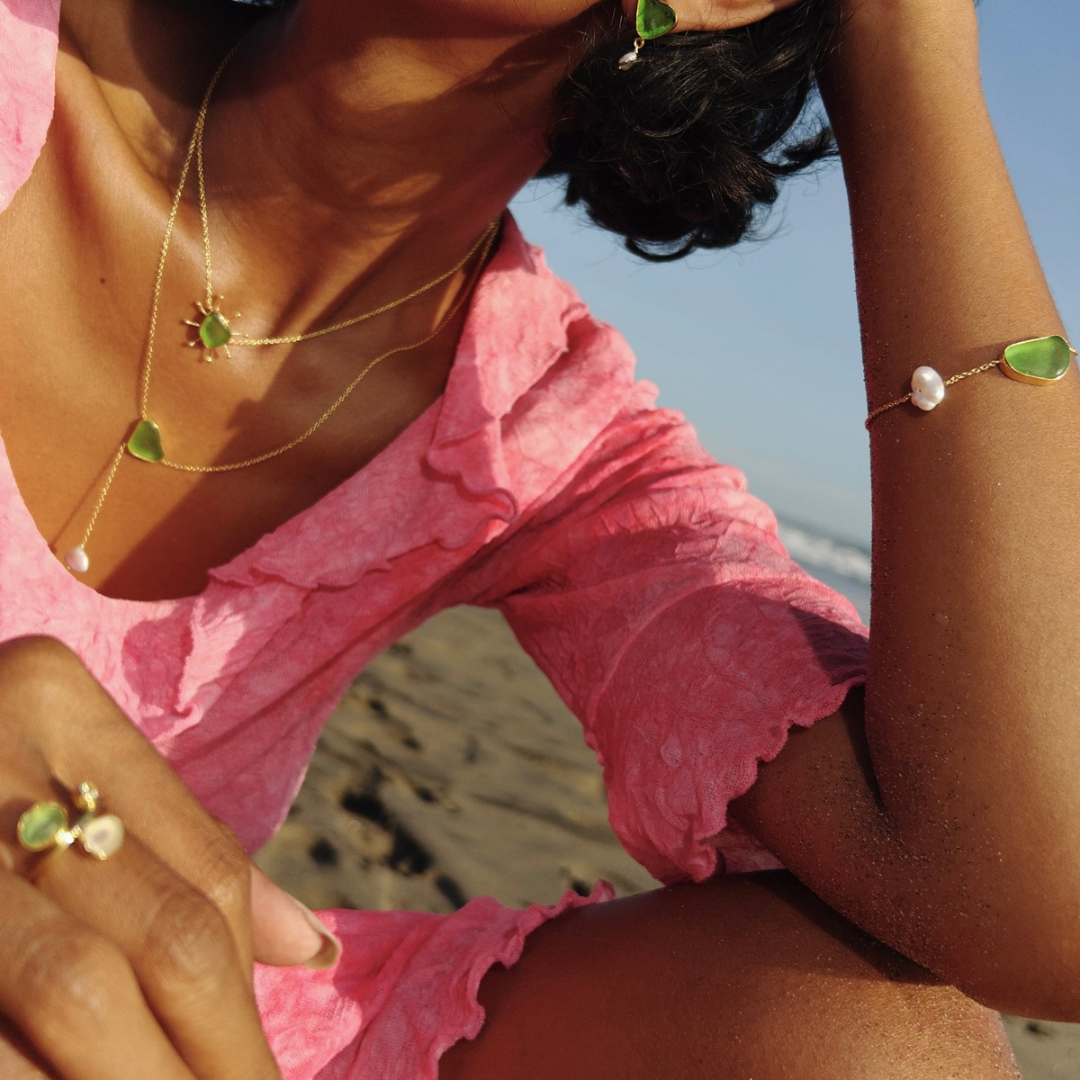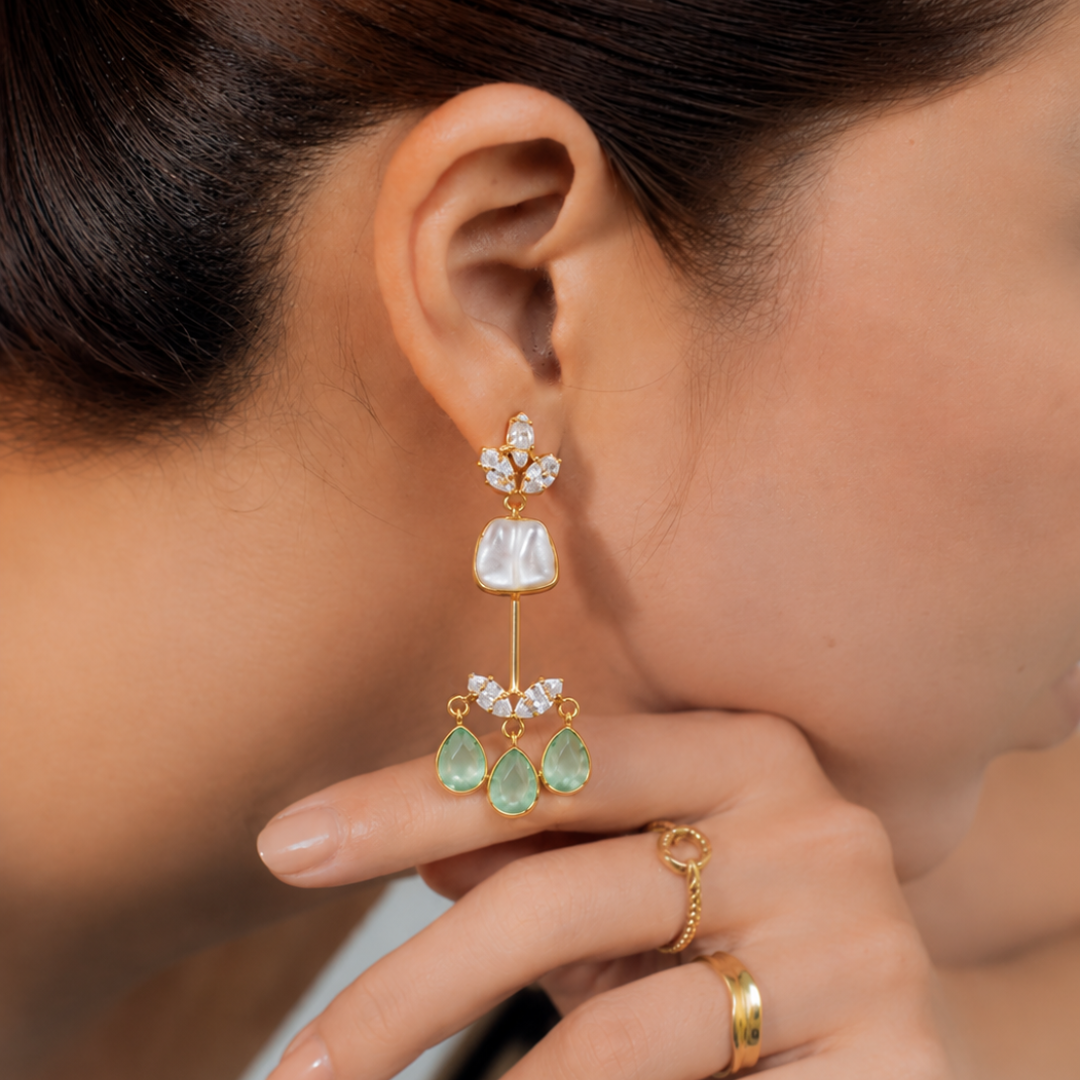
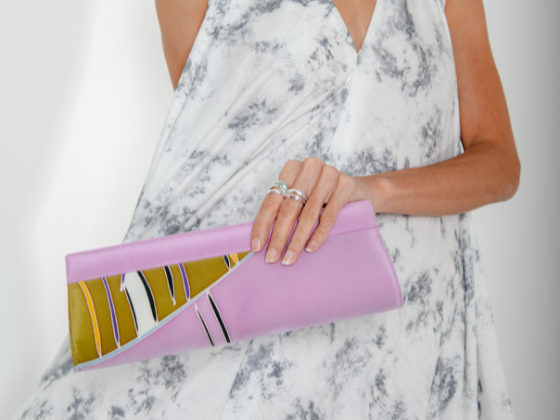
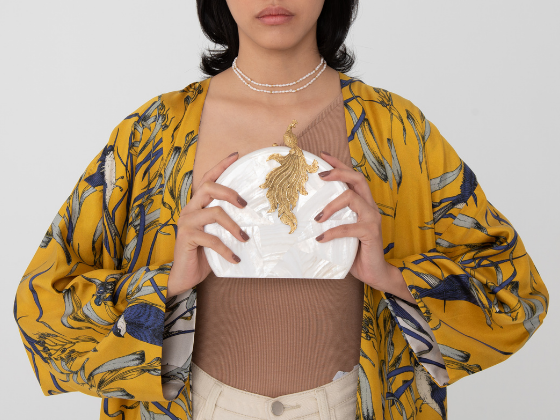


Silk & Plum began with a shift in perspective. After years in corporate life, founder and creative director Alyia Nissa found herself drawn less to impulse and more to intention—choosing fewer, better pieces that reflected who she had become. That way of thinking, shaped by her lifelong love of silk and reinforced through travels across Southeast Asia and Europe, became the foundation of the brand. Today, Silk & Plum creates clothing and silk accessories that bridge Eastern craftsmanship with contemporary dressing, celebrating beautiful fabrics, thoughtful colour, and the idea that sophistication and self-expression can coexist.
Below, Alyia opens up about the brand in her own words.
Tell us more about the name, Silk & Plum.
Silk & Plum came from a belief that women do not have to choose between sophistication and self expression. We can be both.
Growing up, my mother would excitedly bring out her silk collection and tell us the story behind each piece. In many immigrant and ethnic households, silk is almost a rite of passage. When I started my own brand, I knew silk had to be centre stage.
The ‘Plum’ came from an unexpected moment while vacationing in Paris. I caught my reflection wearing plum from head to toe, with a plum juice from Le Bon Marché. I laughed because I hadn't realised how much I loved the colour until that moment. It had personality.
Silk represents refinement, while Plum represents the playful side of a woman. That's why our logo became a plum fruit. That idea became the foundation for our first collection, In Between Seasons. Women don’t need to be fully maximalists, you can love classic silhouettes and still enjoy colour.
Do you draw on your past corporate and legal experience in building your fashion brand?
Absolutely. I'm actually very glad life took me down that path.
I've wanted to start a fashion brand since I was seven. I was constantly sketching gowns and thought I'd end up at fashion school. Instead, I studied International Business and built a career in corporate communications within the oil and gas industry.
It taught me that successful projects are built through small, consistent efforts, not one big life-changing moment. I rarely start a project without first creating a document, mapping out a plan and thinking through different scenarios. That mindset proved invaluable through production delays, sampling and the inevitable setbacks that come with launching a brand.
Working in communications also gave me room to be creative through campaigns, events and storytelling. Today, I get to wear both hats. One moment I'm reviewing production timelines and budgets, the next I'm discussing fabric swatches, colour palettes or sketching ideas for the next collection.
I genuinely enjoy switching between those worlds.
How has your relationship with clothing changed through different seasons of life?
I love the phrase "seasons of life" because it reminds us that we're not meant to stay the same person forever. We continuously evolve, and so does our relationship with clothing.
For me, it was transitioning from corporate life to becoming a housewife and finding purpose. I travelled frequently with my husband throughout Southeast Asia and Europe, where I met remarkable older women. They spoke well, dressed beautifully and seemed completely comfortable with who they were. The common thread was intention. They had a strong sense of identity and were intentional about how they wanted to show up in the world, and their clothing became an extension of that.
Then someone I loved experienced a medical emergency, and I spent close to five hours sitting outside an emergency room alone in a foreign country. It shifted my priorities, including the way I shopped.
Today, I'm drawn towards quality over quantity and pieces that feel meaningful rather than impulsive. A few months later, I started Silk & Plum. In many ways, that's my full circle intention story.
What have conversations with your customers taught you about what women are looking for today?
We've only been in the market for a few months, so I still consider myself to be collecting data rather than drawing conclusions.
One thing I've realised is that taste is incredibly personal. During our first pop-up, some women walked straight past the booth, while others stopped, ran their hands across the fabrics, asked about the fibres, tried on multiple pieces and left with several. Not everyone is drawn to jacquards or immediately understands raw silk, but the women who do tend to recognise it almost instantly.
The conversations have been even more interesting than the purchases. I met women who had just retired, returned to themselves after raising children, left a marriage or started a new career. They wanted clothes that reflected who they had become.
I don't think women are searching for one thing anymore. Whether it's comfort, colour, natural fabrics or simply pieces that feel a little more special, every woman defines that differently. But one thing I'm quite certain of is that they're moving beyond the beige era. They still want timeless wardrobes, just with more personality.
Do you remember the first time you encountered a piece of silk that changed the way you thought about the fabric?
Absolutely. As a child, I noticed an apple green piece of raw silk in my mother's wardrobe and asked if it was torn because of the uneven slubs. She looked almost horrified and said, "Oh no, this is one of my most prized possessions." She explained that the slubs weren't flaws at all, but what made Indian raw silk so special.
Decades later, I chose a blue raw silk sherwani for my husband at our Pakistani wedding ceremony, while I wore a softer pink silk blend. I also had an emerald green silk shantung Malay set custom-made for the first time I played hostess. I'd like to think that was the beginning of my own silk story, much like my mother had hers.
Today, my favourite moment is watching someone touch raw silk for the first time. They pause, run their fingers across the slubs and ask about the texture. I always smile because, in many ways, I'm simply passing on the same appreciation my mother passed on to me.
What have you learned about silk through working with it that most people wouldn't know?
I found myself reading far beyond fashion and became fascinated by the Silk Road, by how silk originated in China and travelled across continents, shaping trade. The Romans prized it so highly that writers of the time complained about the amount of silver flowing east in exchange for silk. I also loved learning about the old legend of how silk was first discovered. It's said that a Chinese empress was drinking tea beneath a mulberry tree when a silkworm cocoon fell into her cup. As the hot water loosened the fibres, she noticed a single thread begin to unravel, revealing just how long and fine it was.
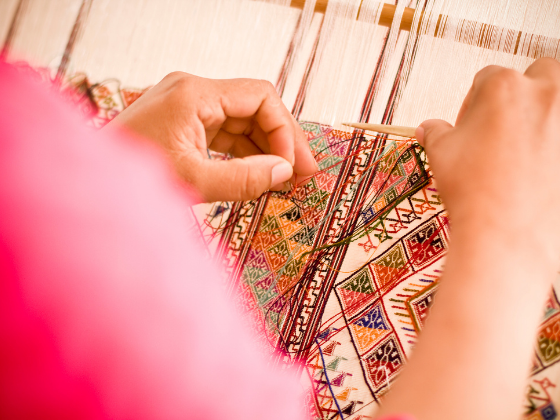
Learning how silk is harvested also gave me a deep appreciation for the people behind it. So much of it begins in rural villages, where families spend countless hours tending silkworms and harvesting cocoons by hand. Their hands are behind every thread of silk we wear.
Many people assume the slubs are imperfections, but they're actually one of its defining characteristics, traditionally formed when two silkworms spin their cocoons so closely together that their fibres intertwine, which makes it that much more unique.
Can you walk us through how a Silk & Plum piece comes together, from concept to finished garment?
I've learned that slow fashion really is slow. From the first idea to launch, a collection can easily take nine months to a year.
It starts with research. I spend a lot of time studying fabrics and understanding the story behind the textiles before I even begin messily sketching. Then I develop the concept and our custom print before working with a freelance designer to refine the artwork, followed by fabric selection, pattern making and sampling.
Sampling is by far the longest stage. For our first collection, we even custom dyed our silk because the navy wasn't quite the shade I had envisioned, while the pink felt too bright. I then work with a local female designer to refine the fit and proportions until everything feels right.
Once samples are approved, production begins. At the same time, we're naming pieces, planning the photoshoot, preparing the website and developing the campaign ready for launch. I find it all incredibly exhilarating.
What details tend to matter most to you, even if customers don't immediately notice them?
The colour palette. I spent a lot of time making sure every colour in the collection naturally complemented the next. From Olive, Lychee and Navy to Lilac, Magenta and our Sandstone neutral, I wanted every piece to feel like it belonged together, even though they're made from different fabrics.
Financially, it probably wasn't the easiest decision for a first collection. I could have launched with fewer pieces, but I wanted women to be able to pick up almost any two garments and discover they worked together effortlessly, whether through colour, texture or both.
Only two customers have noticed it so far, but that meant everything to me.
What has surprised you most about building Silk & Plum?
It's that the market isn't as saturated as people think. Clearly, I'm not the first person to work with silk or encourage women to embrace colour and self expression. There are several independent brands that have paved the way. But because women are ever evolving, we're always open to discovering brands that reflect where we are in life.
I realised it's because women are shopping differently. We even say on our wash labels that the Silk & Plum woman takes care of her clothes, passes them down and keeps them out of landfills. So when women buy with more intention, they naturally make room for independent brands that share those values. There's room for all of us.
What would you like Silk & Plum to be known for ten years from now?
As an independent brand that a) bridges East and West. While we have deep roots in the East, I don't see Silk & Plum as an ethnic brand. I want women everywhere to see themselves in it - just like our tagline ‘Crafted with love in the East, for women everywhere.’
And b) that helps the new younger generation fall in love with beautiful fabrics. I hope they see them as something they can wear every day, not just for weddings or special occasions.
If, ten years from now, we've built a brand with a clear point of view, found our women who already know, and quietly lived out our four guiding values of Intention, Identity, Balance and Continuity through everything we create, I'd be incredibly proud of that.